
The Research
Who is shopping for Summer Camps? -
-
Parents (primarily Millennial parents)
-
The "$75,000 Threshold": Approximately 52% of all children attending summer camps come from families with an annual HHI over $75,000.
-
The "$150,000+ Segment": In specialized or elite resident camp studies, nearly 47% of families reported an annual income exceeding $150,000.
-
Diverse Families: According to the ACA, approximately 44% of camps report that their camper population is becoming more racially and ethnically diverse.
-
Dual-income households: They require programs that cover the "childcare gap" between June and August. They prioritize reliability, extended care hours (before/after care), and convenience.
-
Multi-child households- Families are highly sensitive to sibling discounts. Research shows that once a family finds a camp that works for one child, they are 70% more likely to send all siblings to the same location to simplify logistics.
-
Grandparents (increasingly acting as payers or primary researchers)
Breakout of Campers +
Psychographics +
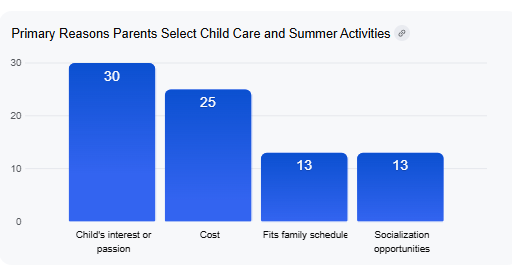
What Parents Care About the Most +
Key Barriers to Enrollment +



AIM
Why AIM?
Based on our general research, we are able to find the EXACT buyers that fits our target. AIM enriches our marketing campaigns so we are not investing wasted dollars on people that aren't the right fit. More importantly, AIM is a great way to market to potential parents in every stage of the buying journey.
(Awareness) Global Search
Using Global Search, you can prove the opportunity to your prospect by using these filters (based on our research) and apply them within your market.
Use this general research as a reference in your initial outreach, but apply the data that you learn from your prospect in the CNA.
Use this general research as a reference in your initial outreach, but apply the data that you learn from your prospect in the CNA.
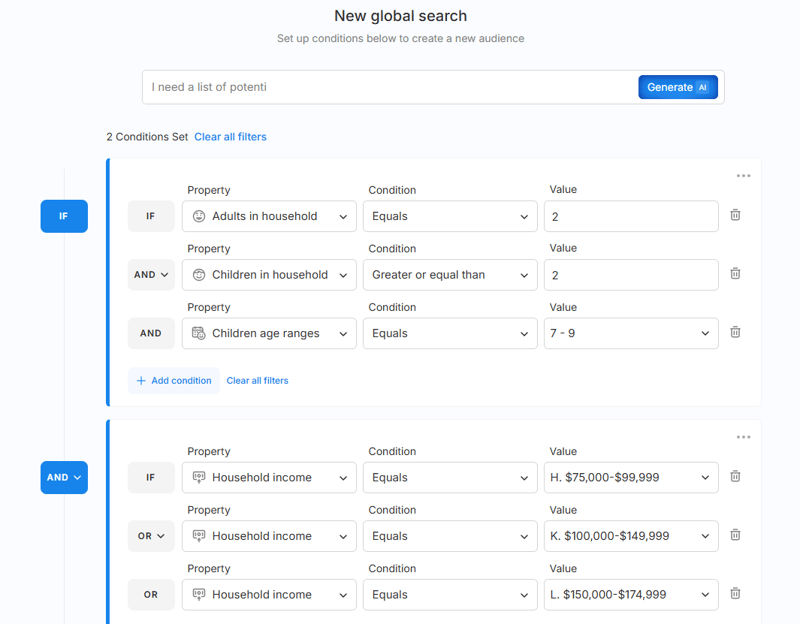
(Awareness) Look alike audiences
- We can use AIM to find other parents that looks like your prospects current customers.
(Interest) Pulse
- Using Pulse, you can show your prospect the amount of active researchers that are looking for their services within a 7 day period.
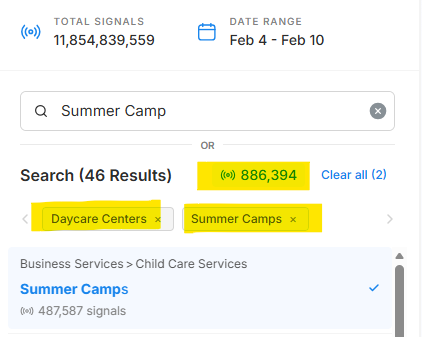
(Consideration) Re-targeting Pixel
- The research tells us that parents spend 1-2 months researching camps before they commit. With AIM, we can remind parents of your brand until they finally commit.
OTT
AIM Data can be applied to our OTT campaigns, making it a perfect solution to speak directly to parents. Since we know they are working, we can flight these campaigns to run during non-work hours.
The research also tells us that the interest and excitement of children are a major deciding factor when it comes to committing. While we don't target kids specifically, we can be strategic about placement:
- After school and early evenings
- Weekends
- Family-dense zip codes
- Contextual content that skews family friendly
- Create sub-campaigns
- Households with younger/older kids
- Creative for grandparents
SEO
Why SEO
Based on research, we know that parents spend 1-2 months comparing options and book 2-3 months in advance. That means search behavior starts before camps even realize demand is heating up.
- Show up when research begins
- Capture parents in comparison mode
- Build authority before booking decisions happen
- Reduces reliance on paid search cost
We also know that proximity to home and work is one of the deciding factors when picking a camp.
- This means GBP profile optimizations are critical.
- "Near me" keyword rankings are imperative.
92% of parents trust recommendations and 70% trust online opinions which means:
- Reputation Management is imperative when managing reviews and getting enough to impact decision makers of the family.
O&O
Why O&O
Research tells us that child influence and excitement is a big part of the decision process. Marketing via broadcast allows your message to be received by more than one person at a time, meaning parents and children are receiving the message together which influences their decision.
- Parents trust local websites
- Pairing your TV/Radio campaign with site and streaming visibility increases the frequency of the message
- Word of mouth amplification
Creative advantages
The research tells us that Cost, Child Interest, Proximity and Personal Development are some of the most important factors when making a decision. Commercials allow you to address all these points in a short amount of time, while also building frequency.
Non-Core Strategy Additions
NextDoor makes a great addition since we know that 90% of parents look to reviews and recommendations from their neighbors.
Social is a great way to extend the message and build frequency. Especially because parents utilize social channels for parents groups and to ingest user generated content that may contribute to their decision making.
Digital Out of Home is ideal especially in locations with heavy family traffic (especially where kids are likely to be present).
Creative Ideas
- Sibling Discounts (for multi-children households)
- Grandparent Campaign
- 76% of parents say their ability to focus at work depends entirely on the reliability of their summer schedule. If a camp doesn't offer consistent, multi-week options, parents often look elsewhere to avoid "patchworking" their summer.